wm cheng
-
Posts
4340 -
Joined
-
Last visited
Content Type
Profiles
Forums
Events
Gallery
Everything posted by wm cheng
-
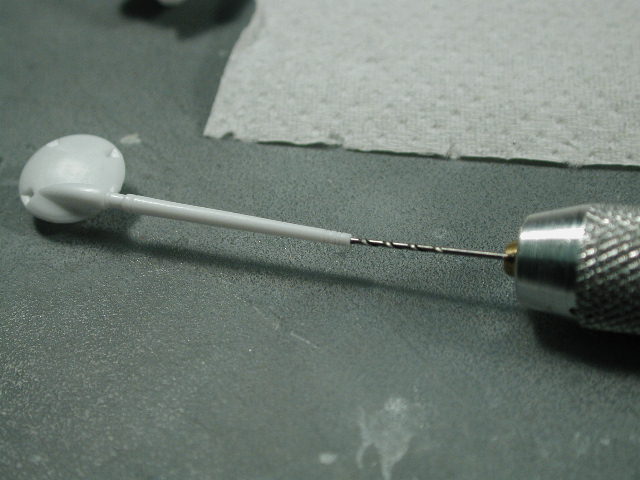
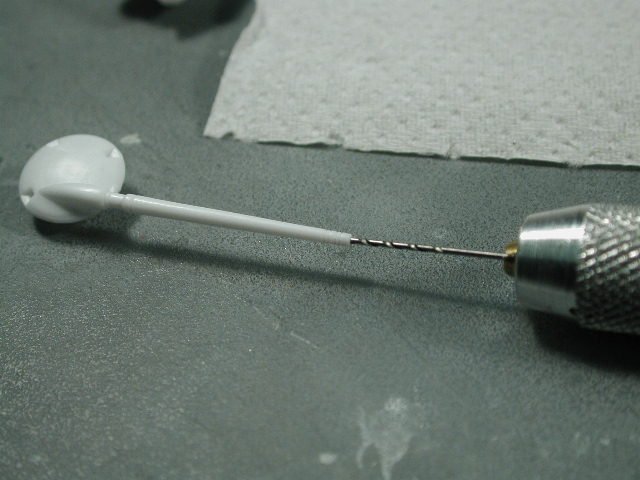
I thought its about time to drill out the head laser tips, it will add a lot more realism to have the lasers hollowed out.
-
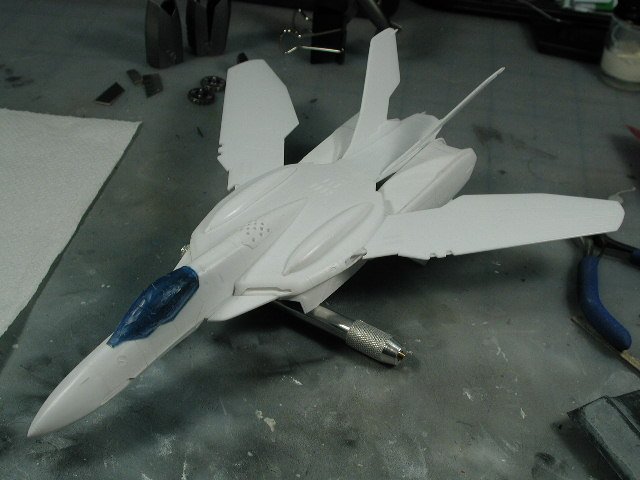
A shot of a dry fit assembly - I like the airbrake a lot with the hole drilled out, I think its worth doing even if you are gluing it down fold back. It lets you see into the brake well with some details inside.
-
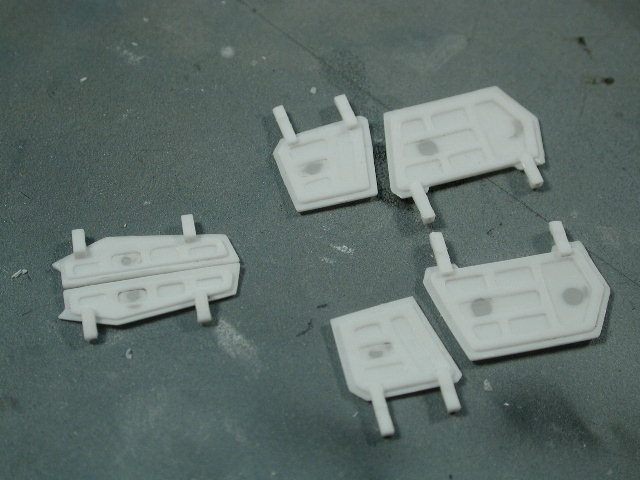
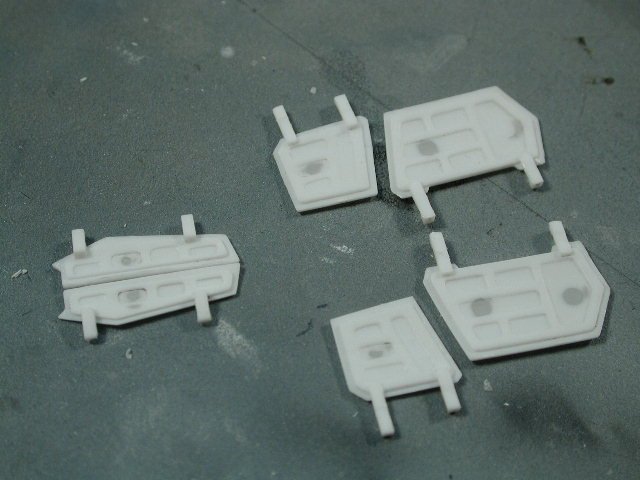
Here they are after they have been sanded - it will probably take a few coats of white to truely get the grey spots to be white - why don't they make white Mr. Surfacer?
-
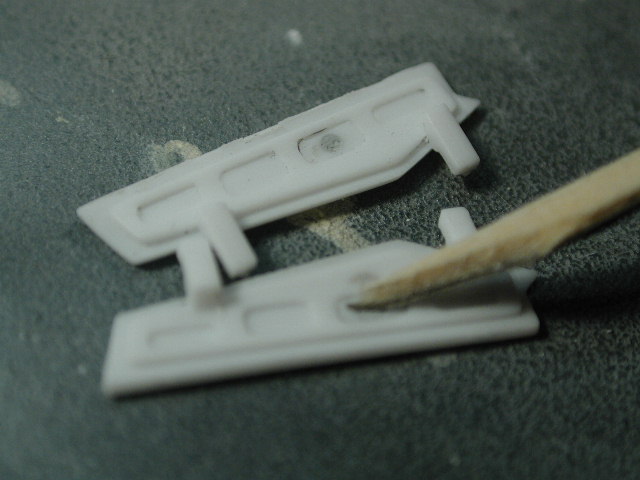
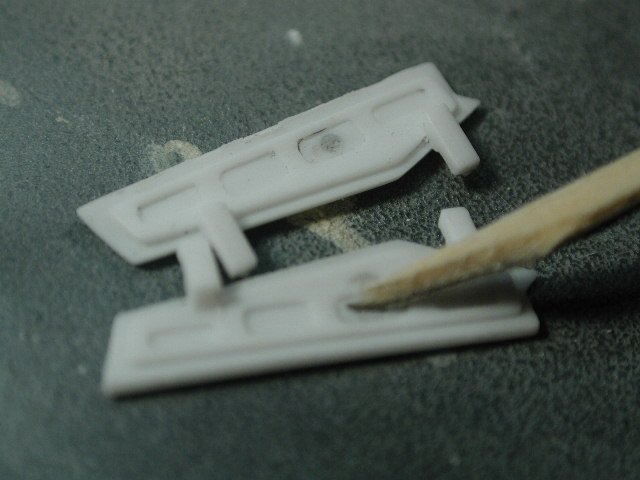
This makes it easier to sand away the holes that were filled in earlier with Mr. Surfacer while still keeping the surrounding details.
-
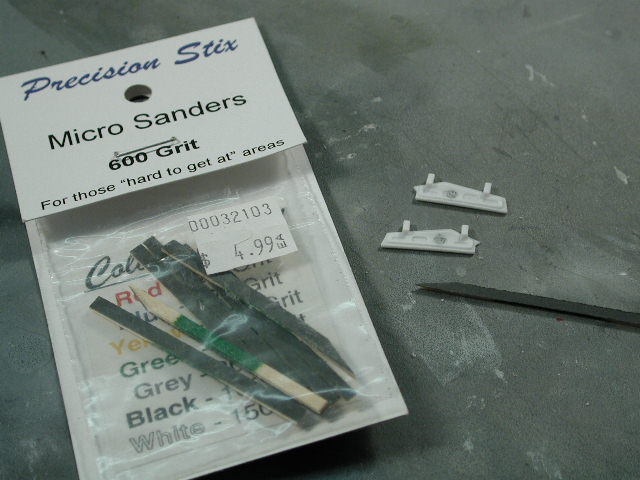
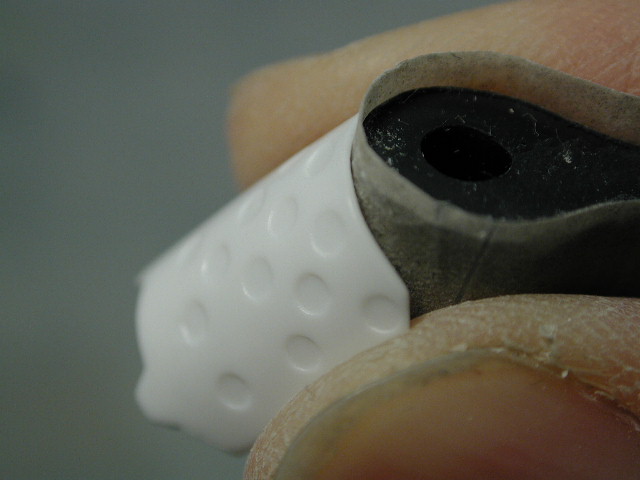
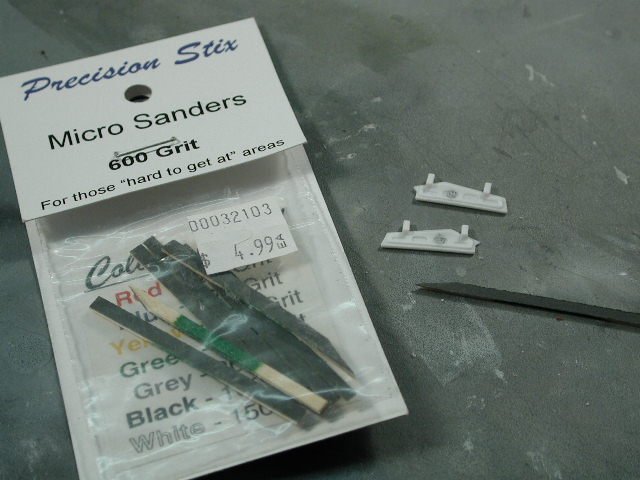
Here's a shot of those sanding sticks. They came in real handy when trying to sand the filled in injector pin depressions inside the landing gear doors. I'm lazy so I just bought a pack of these - but I suppose anyone can make them, just glue your favourite grade of sandpaper to little wooden sticks.
-
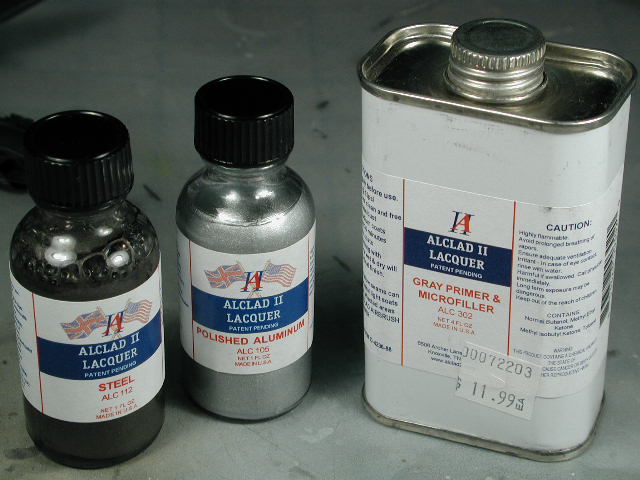
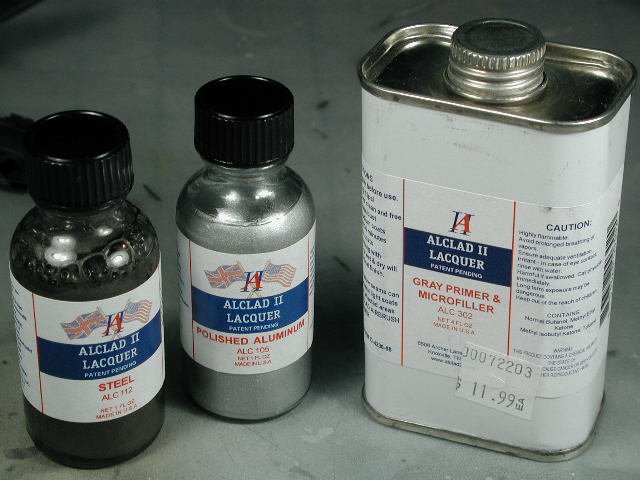
Hey Everybody. The metalizers I use are Alclad - you can get them at most hobby stores, they are laquer based so Mr. Colour thinner or ModelMaster Acryl thinners and solvents work on them. They are great, found them on the Yukikaze model thread, and I will never look back. The great thing is that they do not need a sealer nor buffing - although it does say that buffing will improve the look - I haven't had the need yet. Most metalizers require a sealer, and the sealer often dulls the shine down - which in my opinion kind of goes against the effect you want to achieve with a metalizer. They are pre-thinned to be airbrushed (so its a bit expensive for what you get, those little bottles are around $12cdn - maybe $6-8usd) and must be airbrushed. The gray primer is also pre-thinned and is excellent - they are sprayed at a lower pressure around 12-15psi is recommended on the bottle. With these and all metalizers, the surface preparation is essential. The smoother the underlying surface it is, the more mirror/glass like you finish will be. I would spend extra care in filling or sanding any pieces that are to be metalic, since the sheen will often catch the light at odd angles and exaggerate any flaws in the model. I do prime the parts first with the primer before using the metalizer - te primer tends to to smooth things out a bit. With the polished aluminum or chrome, they even suggest a coat of gloss black after the primer before the metalizer. I've tried it both ways, and you really need the gloss black underneath, I think it acts as a mirror with a backing - the shine achieved is well worth the extra step. I'm ready to give it the first coat of light white/grey - so wish me luck, I'll post as soon as I can.
-
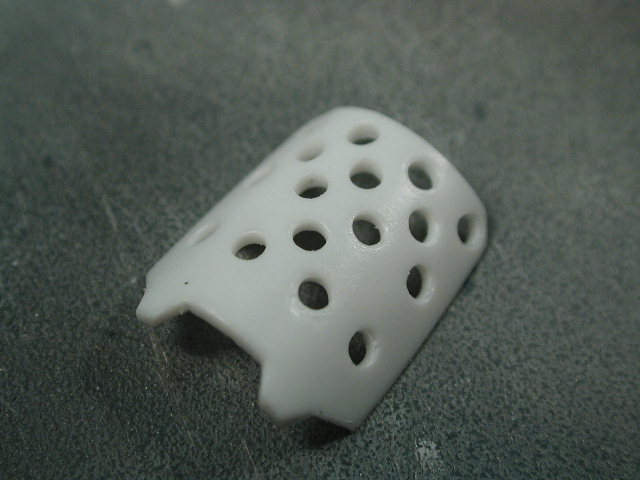
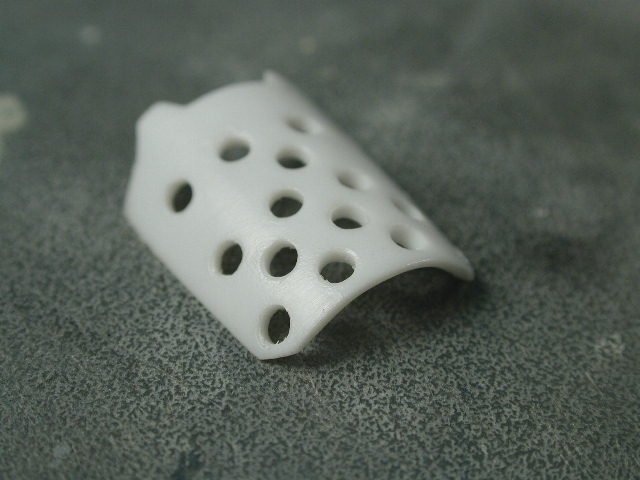
Here it is from the rear - a prime candidate for a photo-etched part later on (are you listening Hasegawa?) That's it for the time being - more sanding on that glue oozed seam - then its painting - yipeee!
-
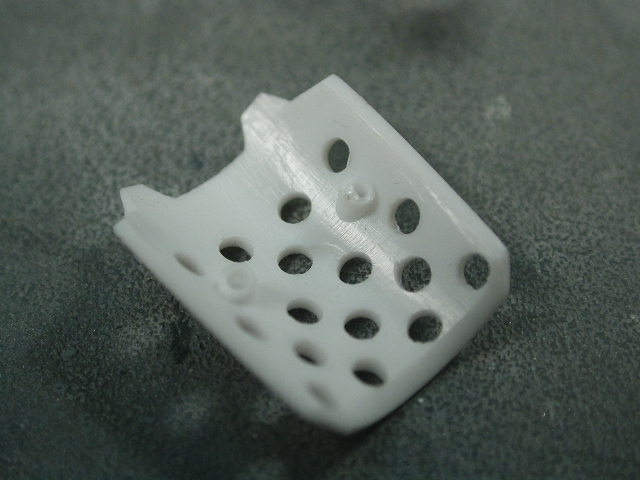
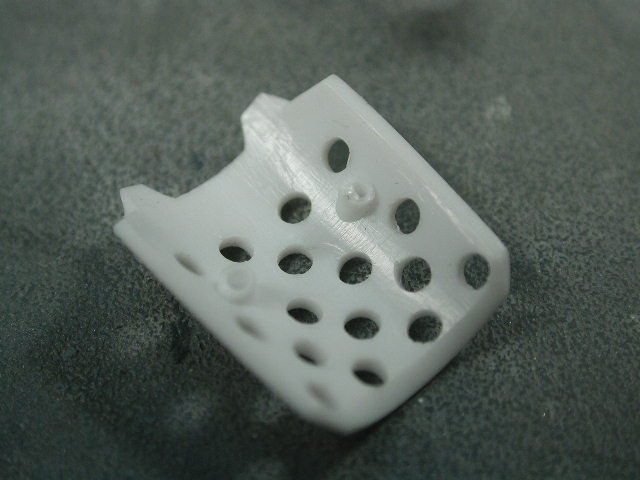
Here's the back side - you can see the bevel at the rear to make the brake appear thinner - I did the same thing with the VF-1 brake if you choose to display it open.
-
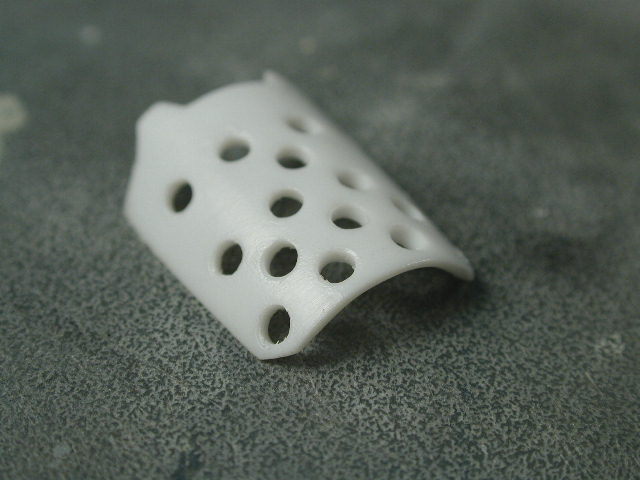
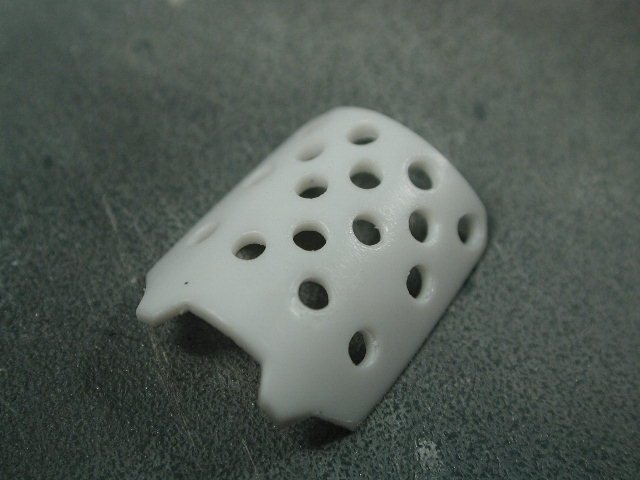
Here it is with the holes finished, I used a slightly larger bit to finish them off more as a reamer to finish the sides. I am glad that I did not thin the piece down in the beginning - it would be too fragile. The holes are small enough that the edges showing do not bother me as much. Please take care at the two last corners, as the holes are really close to the end corners of the brake.
-
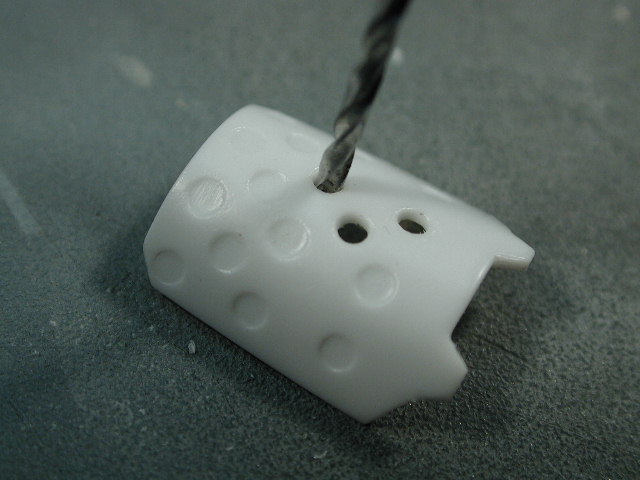
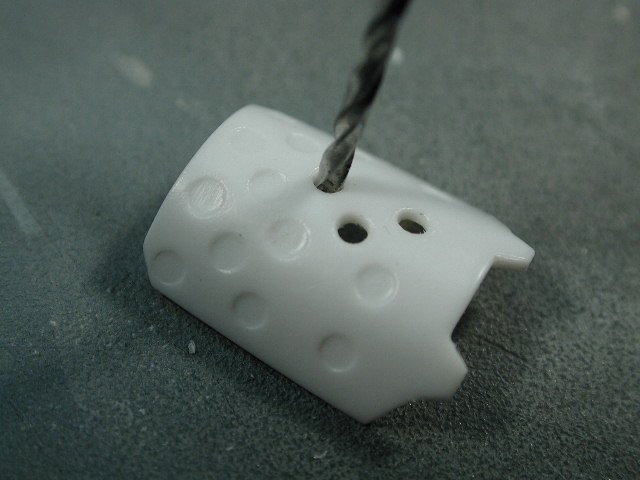
Here I started with a smaller bit first - its important that you don't try and force it, just gently ease the pin-vise bit through. The more holes you drill, the more fragile the piece becomes. I always try to drill directly perpecticular to the hole.
-
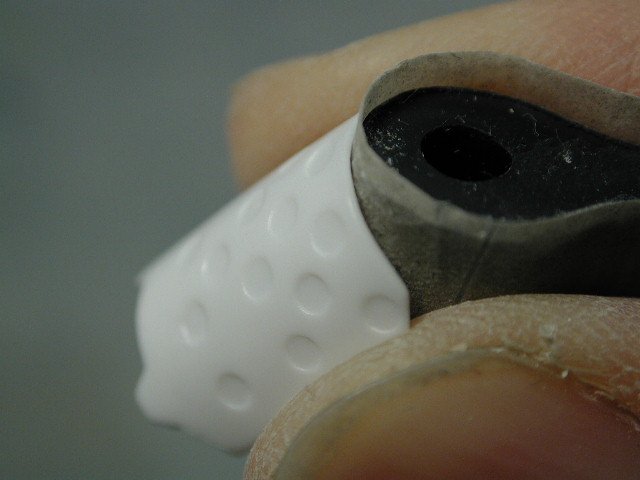
I've been look forward to this for weeks. The airbrake, I would suggest thinning the sides by sanding the edges at a 45 degree to make the edges look thinner - more in scale with the sheet metal of the plane. I had thought about thinning the entire brake down since I'd be drilling holes through it so you would catch the edges in every hole and the thick plastic would be a dead giveaway - but I was worried that would serious weaken the plastic. Its six or 1/2 dozen or another... so I chose the safe and easy route and just thinned the outside visible edges. For the truely insane out there, I suppose you could manufacture this item with a thin bent sheet of metal to get the right thickness I'm not there yet. (yuck! I think I need a manicure )
-
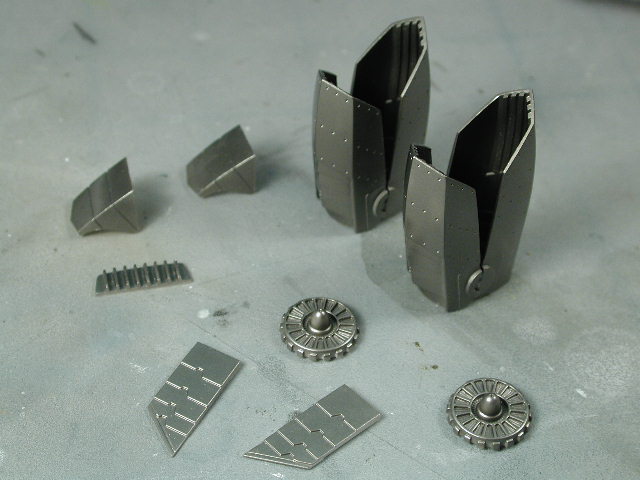
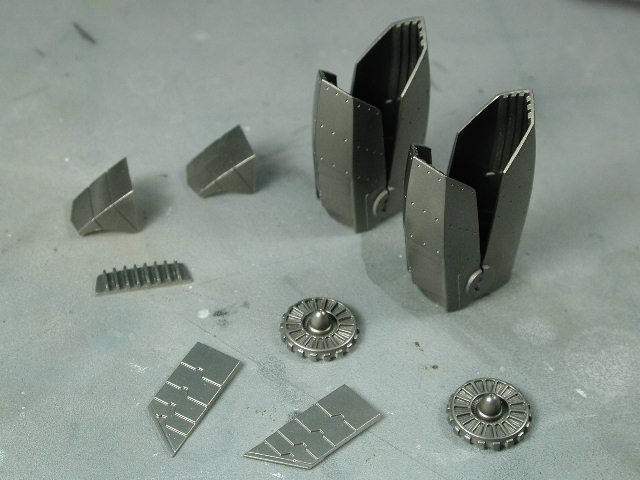
Some more metallic parts...
-
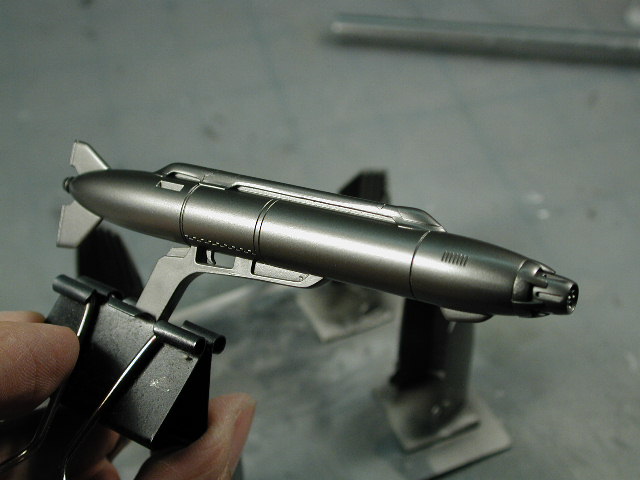
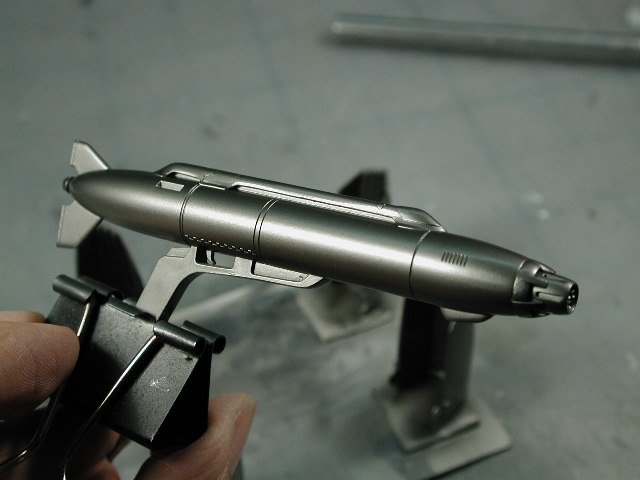
The gun achieved a almost mirror like metallic finish without buffing or sealing.
-
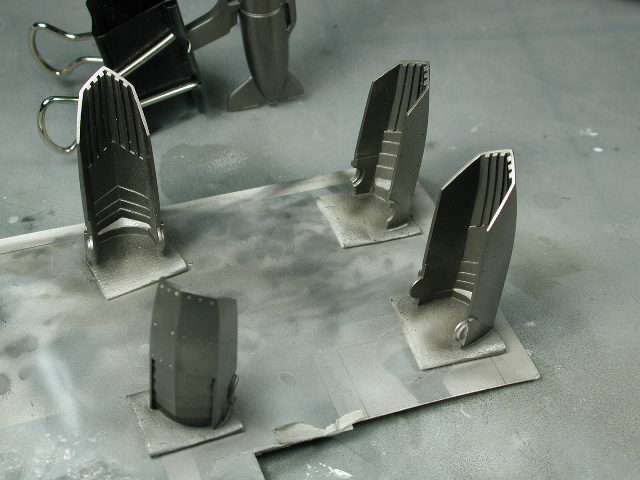
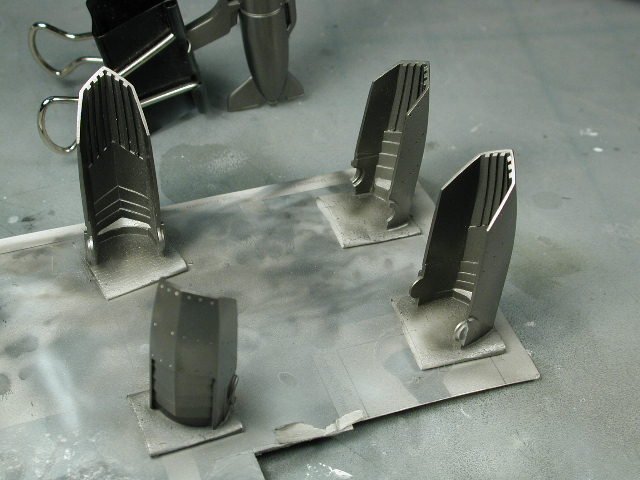
I took a little time out to paint the metallic steel parts. Man its been a while, I forgot to prime first - and with this Alcad metallizer stuff, you really need to use their excellent primer. Its wierd especially with metallic paints all the imperfections in the molding of the plastic that comes through. I had to prime over top of the painted surfaces and re-spray the metallic steel colour. However, this finish is so much more satisfying that the Tamiya metallic grey or steel. Just make sure you wear a mask when spraying, this laquer stuff especially with metallic particles suspended in it can't be healthy for ya!
-
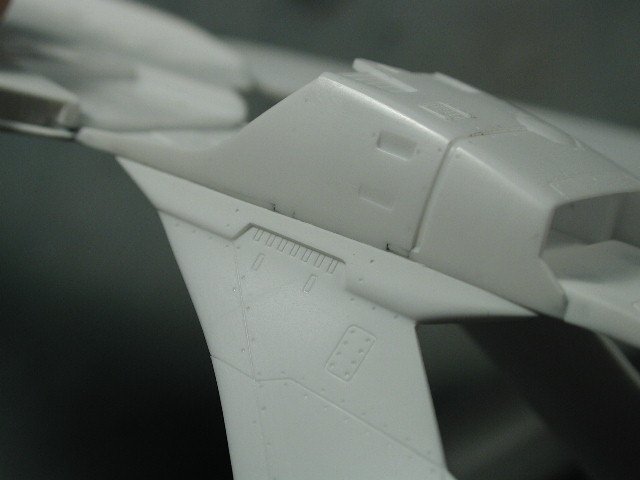
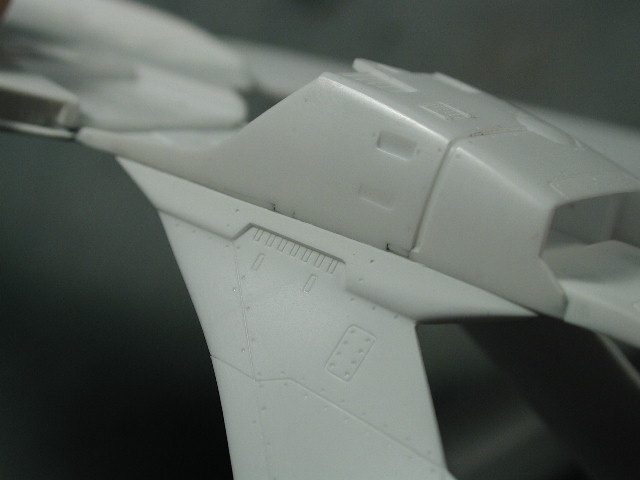
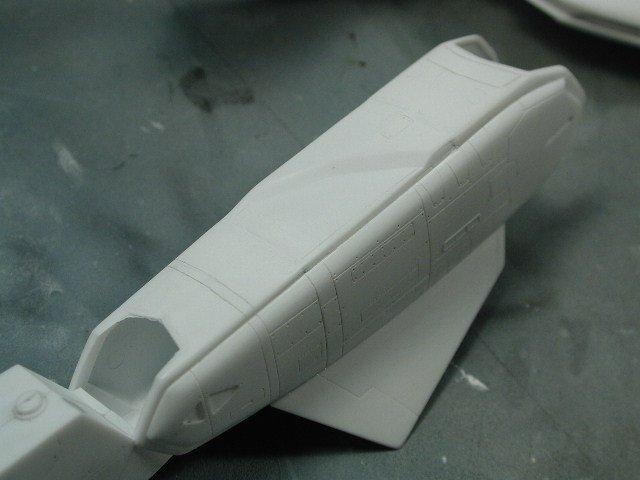
The top also turned out okay now (after several tries)- unfortunately I sanded so much that I sort of lost the faint small rectangular panels on the top surface. I would recommend that you glue this top piece onto the legs right away and start filling and sanding with the seams of the legs, that way it's easier to maintain the same slightly ridged profile of the leg.
-
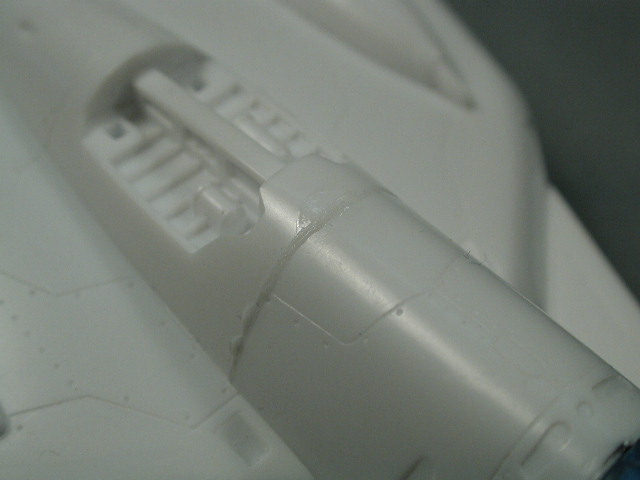
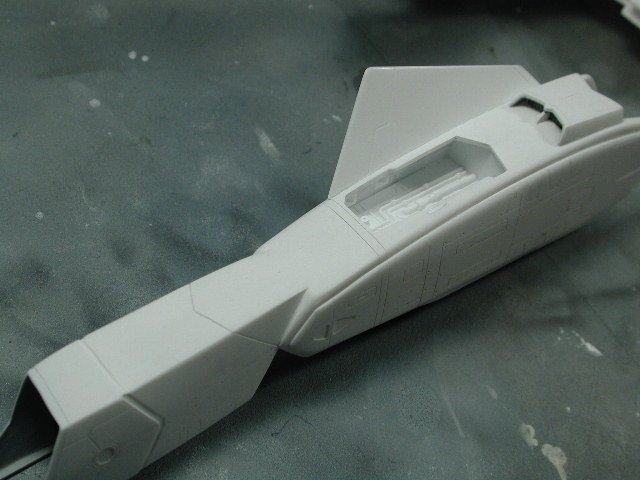
The leg turned out okay as well after I re-sanded several times, the panel lines continue across the seam to my satisfaction, and the re-scribed intake lip turned out okay too. I should of thinned the forward leading edge of the walls of the rear intake by the feet - here's a tip for others The thick plastic walls always make the model look toyish.
-
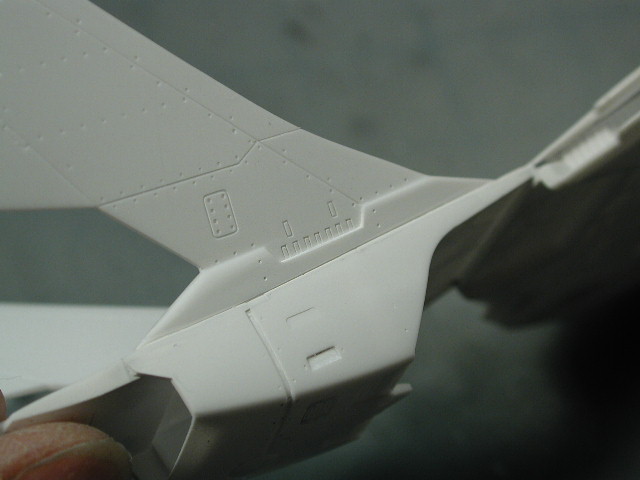
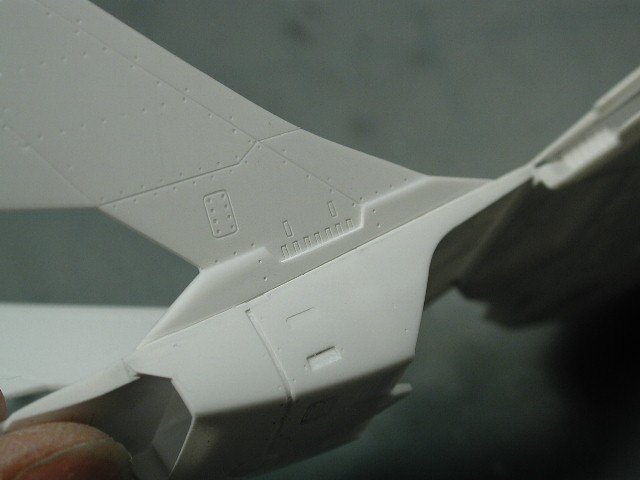
This rudder seam turned out okay after more sanding and filling.
-
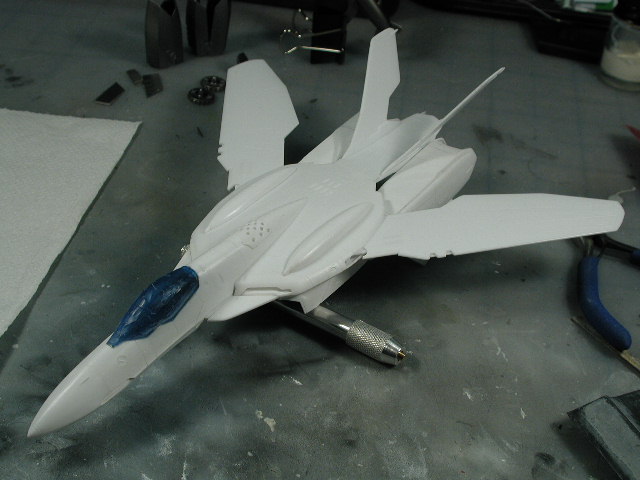
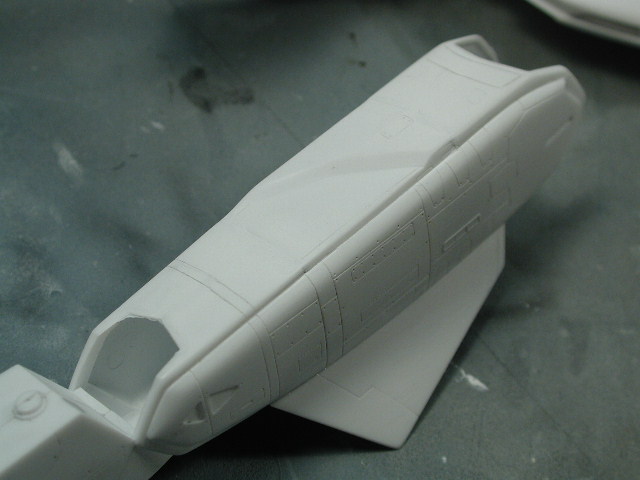
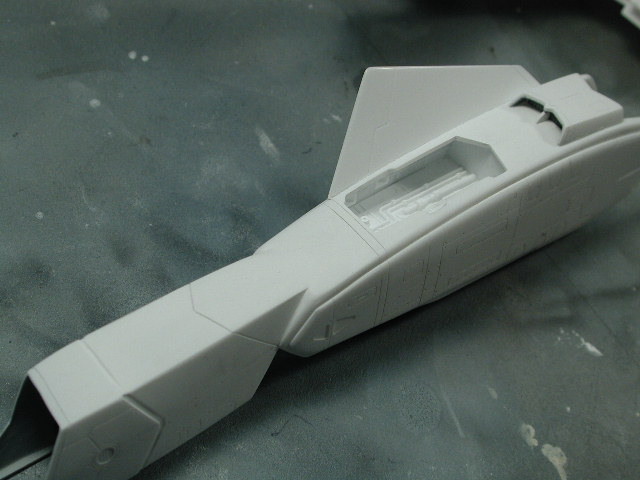
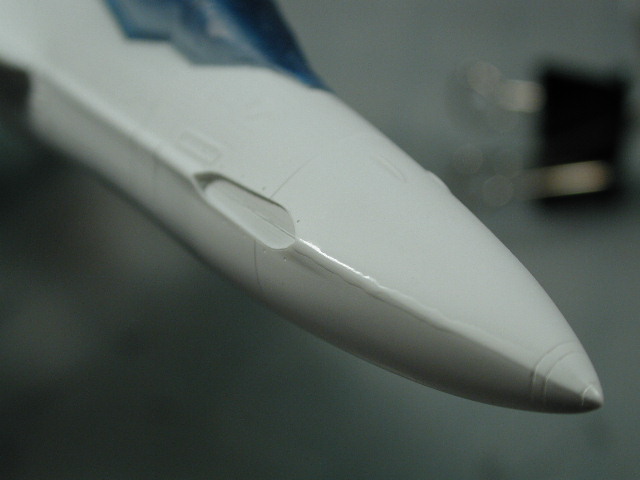
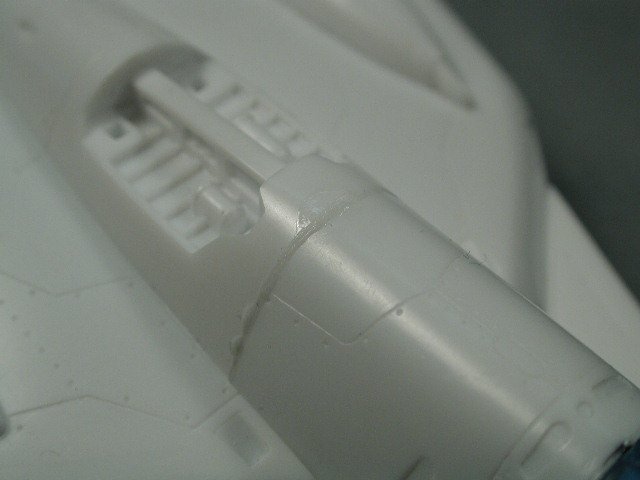
ARRGH!! I'm having bad luck with this bird! I don't know if its me or the kit, but I was hoping that this VF-0 would be like the previous VF-1 where the nose section fits almost seamlessly to the fuselage. Unfortunately, when I slide the nose on, it tends to droop down creating a rather large crack here (it may be that I glued those forward leading edges at a slightly downward angle). So I guess I would have to glue this piece on now so I can do any sanding or repair work before I give the bird a first coat. Unfortunately, to close up the gap, I needed much more glue than I applied (I applied very little at first - wanting to leave the seam as a panel line) - but it wasn't enough to hold close the seam. As a result, I had to pry it apart again, and drop in a bit more liquid cement in the seam - unfortunately I think I added too much, because when I closed up the seam, it all oozed out the sides and gave me this mess. I'll let it dry and sand it flat I hope - I may re-scribe that line in after, but I must have the patience to let it dry completely. Nothing worst than trying to sand away liquid cement excess when its not completely dry - what a mess!
-
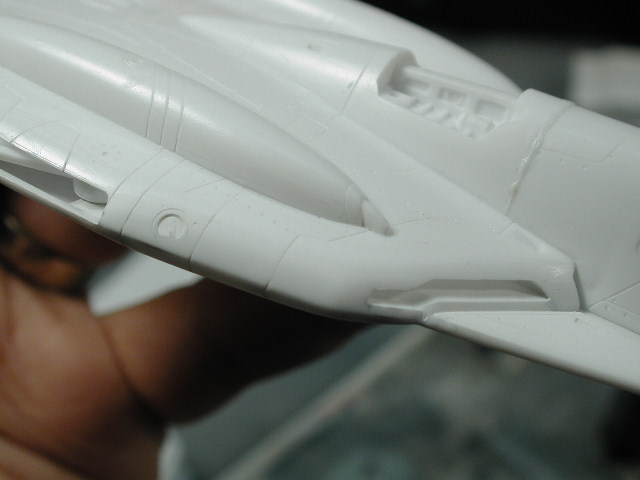
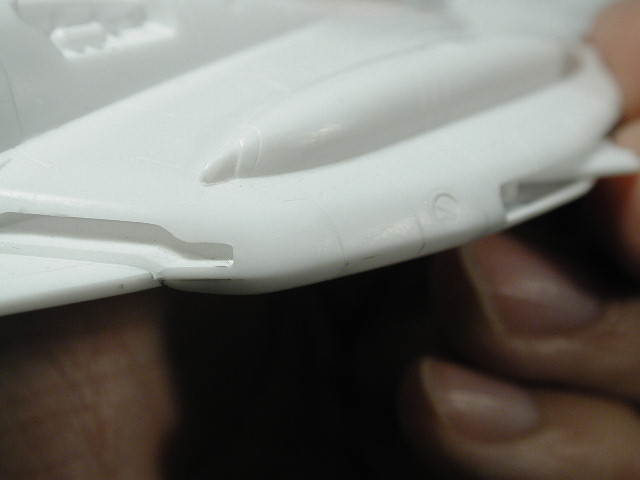
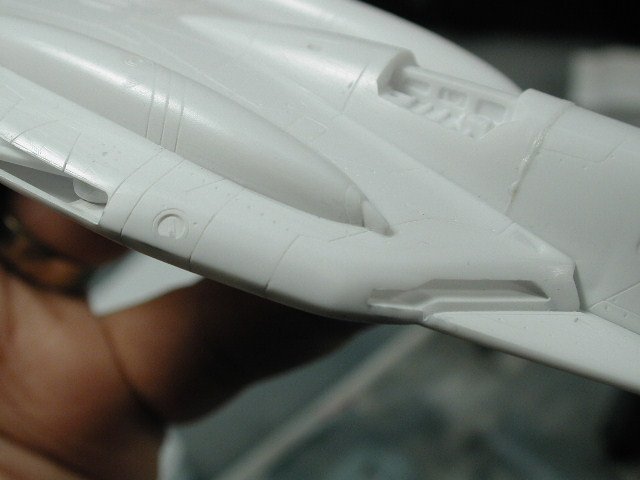
Again, another crucial joint, finally in the right profile, its too easy to sand it flat - but I think it looks better angular but not sharp.
-
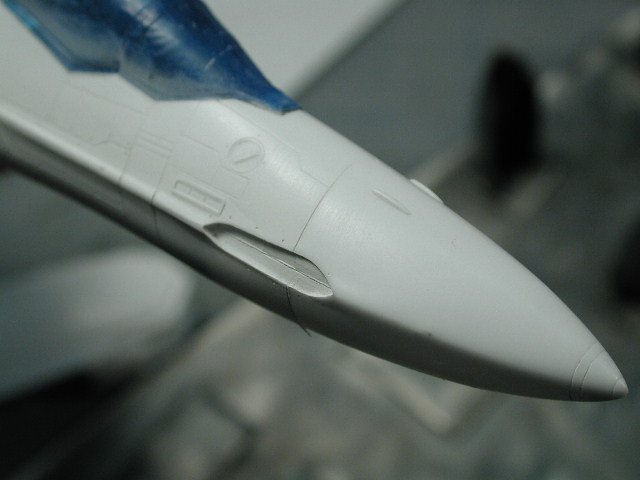
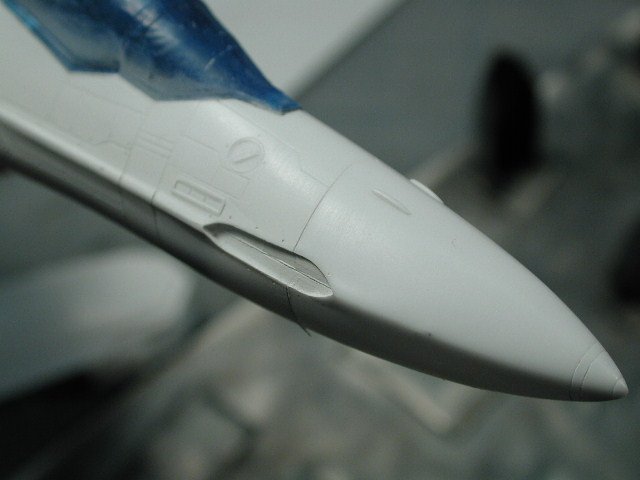
Here's the other side, with any paint and primer sanded off again. The area where the sprue joins the nose cone has kept giving me problems, is just the opposite of a chunk taken away, it's a very minor lump, that can hardly be seen until you paint it. Hopefully its finally gone now. Looks like I need to re-drill some of those bolt holes around the sensor array.
-
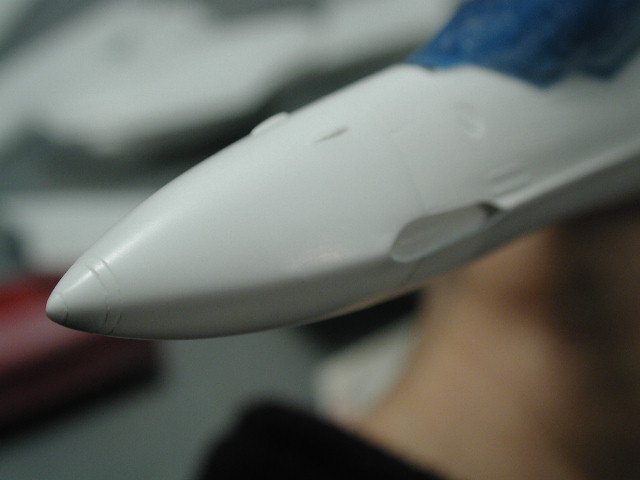
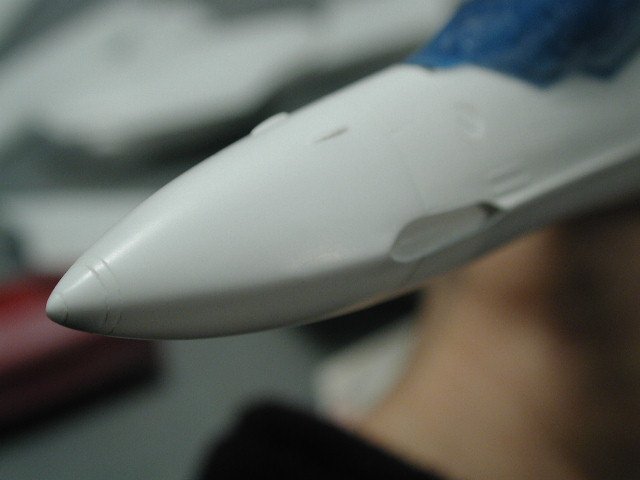
Finally after 3-4 tries, I get a satisfactory profile from round/circular at the tip feathing our to a point near the clear sensor area. I find the nose cone has to be perfect, its the most prominent part of the model.
-
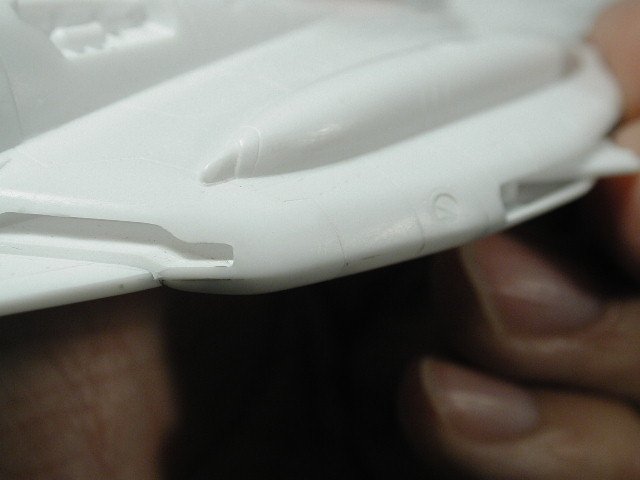
Hey all, I've been sanding, sanding... sanding anytime I get on the bugger. Just when I think I'm done, I prime it in a flat white paint, and some imperfection shows through - so I have to sand it down carefully, using the white paint as a fine filler. After so many tries, I'm pretty much down to the bare plastic. I don't know why I'm having such a hard time this time around - I guess every once in a while you get a model like this - its not that its a bad kit. Just bad luck
-
Woohoo!! hey Rob, please put me down for at least one. Let me know if there is anything I can do to help. What's the status on the mobile launcher - is that included too? I certainly hope so - it provides a much needed base. Question, why are you using the Battroid legs instead of the Fighter legs - I just think the fighter will be more sleek. Hey any chance of a step-by-step progress thread on this?
-
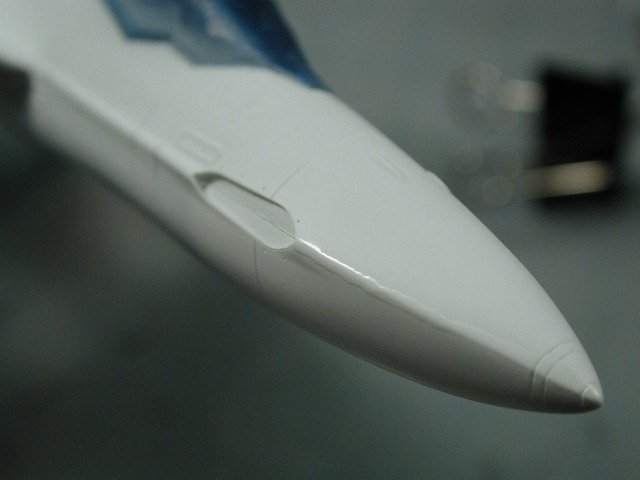
That's what the thick coat of flat white looks like - I will do this in all the problem areas (which is most of all the critical joints ) and attempt to re-sand again... boring, but necessary to achieve a flawless finish. This is often the step I don't spend enough time on - and I always regret it afterwards.
-
Another critical seam to get right (there seems to be more of them on this model than any other so far). The two little tabs even though they have been sanded smooth, don't seem to mate up with the lower portion of the rudders too well. I will paint a thick coat of flat white across this seam are re-sand.